

Digegluten
Aid for indigestion and gluten intolerance
Digegluten is developed to improve digestion and overcome digestive issues for people with heavy digestion and with gluten intolerance.
Gluten intolerance disease is a serious condition where the body reacts to gluten, causing inflammation in the intestinal lining. People with this condition often experience uncomfortable gastrointestinal symptoms such as diarrhea, bloating, and nutrient malabsorption, along with other signs like fatigue, brain fog, joint pain, and anemia.
Even for those without gluten intolerance disease, gluten can still be a trigger. Non-celiac gluten sensitivity can cause abdominal discomfort, irregular bowel habits, headaches, fatigue, and mood changes after consuming gluten-containing foods.
That’s where Digegluten by Aora Health comes in—a powerful digestive supplement designed to help you enjoy food without the worry. Its advanced formula includes specialized enzymes that break down gluten and improve nutrient absorption, supporting better digestion and overall well-being.
Whether you’re managing gluten intolerance, gluten sensitivity, or simply looking to optimize your digestion, Digegluten is here to help you feel your best.
Solutions for Gluten Intolerance and Digestive Complications
Addressing digestive problems caused by accidental gluten intake in individuals with gluten intolerance, we present a comprehensive formula aimed at alleviating heavy digestion.
- Digestive problems caused by accidentally gluten intake.
- Non-celiac gluten intolerance.
- A complete formula to approach gluten intolerance and people experiencing heavy digestion.
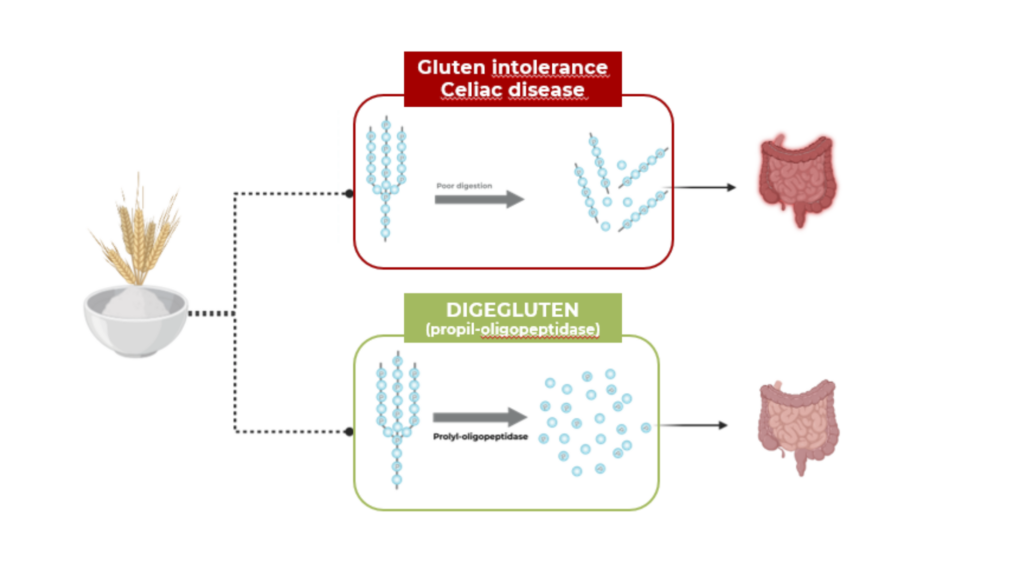
- Use of specific novel compounds such as prolyl-endopeptidases to reduce the abnormal immune response to gluten peptides.
Digestive Enzymes and Their Functions
Digestive enzymes like AN-PEP, lipase, amylase, and protease aid in breaking down complex nutrients, supporting efficient digestion and absorption.
- Propyl-oligopeptidase (AN-PEP). AN-PEP was shown to degrade almost all immunogenic gluten epitopes from gluten-containing meals into non-immunogenic fragments during passage through the stomach compartment.
- Lipase. Lipases are the enzymes in charge of the catalysis of lipids (fats).
- Amylase. Amylase breaks down complex carbohydrates (starch) into simpler sugars, primarily maltose and dextrins.
- Glucoamylase. Glucoamylase breaks down starch and starch-derived sugars into glucose, a simple sugar.
- Protease: Proteins, which are eventually digested by the proteases into amino acids, are critical for proper growth, development, repair, energy, and every type of bodily function.
Improves digestive health with clinically proven results
STUDY 1: DIGESTIVE ENZYMES
The use of digestives enzymes to improve symptoms in patients with non‐celiac gluten sensitivity has been shown. In a reported study, a celiac symptom questionnaire index (CSI) was used to measure symptoms in a patient with non‐celiac gluten sensitivity after a gluten-challenge and the supplementation with digestives enzymes.
Objective:
The objective of this study is to evaluate the effectiveness of enzyme replacement therapy using a specific enzyme mixture in alleviating symptoms in individuals with non-celiac gluten sensitivity (NCGS).
Results:
In this study, digestive enzymes were shown to reduce the CSI score in non‐celiac gluten sensitive subjects.
Ido, H. et al. Combination of Gluten-Digesting Enzymes Improved Symptoms of Non-Celiac Gluten Sensitivity: A Randomized Single-blind, Placebo-controlled Crossover
STUDY 2 AND 3: PROLYL-OLIGOPEPTIDASE
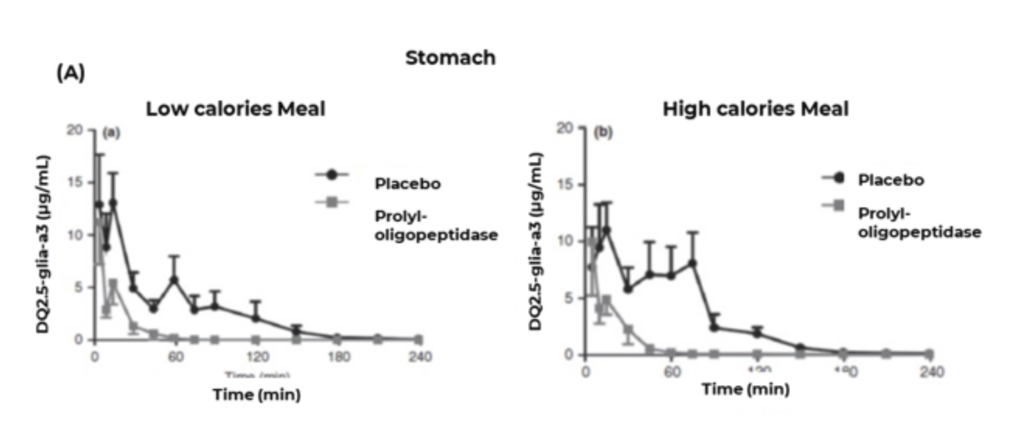
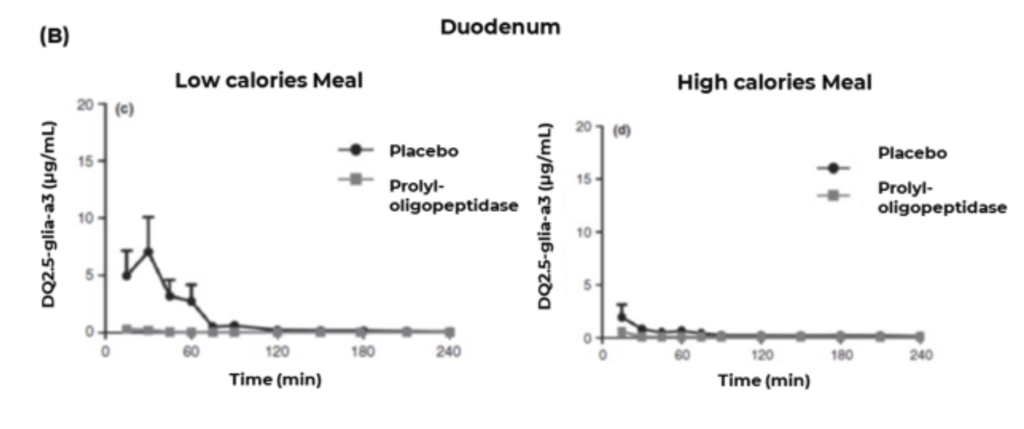
2.Propyl-oligopeptidase was used in a randomized, double-blind, placebo-controlled, cross-over pilot study. In this study, 12 healthy volunteers received AN-PEP to evaluate gluten degradation with an intragastrically delivered gluten-containing meal.
Results:
(A) Prolyl-oligopeptidase significantly reduces gluten epitope concentrations in the stomach of healthy individuals. (B). Prolyl-oligopeptidase significantly reduces gluten epitope concentrations in the duodenum of healthy individuals
Conclusion:
Prolyl-oligopeptidase has been shown to significantly reduce gluten epitope concentrations in the stomach and duodenum. This suggests it may help gluten-intolerant individuals manage symptoms and reduce the impact of accidental gluten exposure.
– Salden, B. N. et al. Randomised clinical study: Aspergillus niger-derived enzyme digests gluten in the stomach of healthy volunteers. Aliment Pharmacol Ther 42, 273–285 (2015).
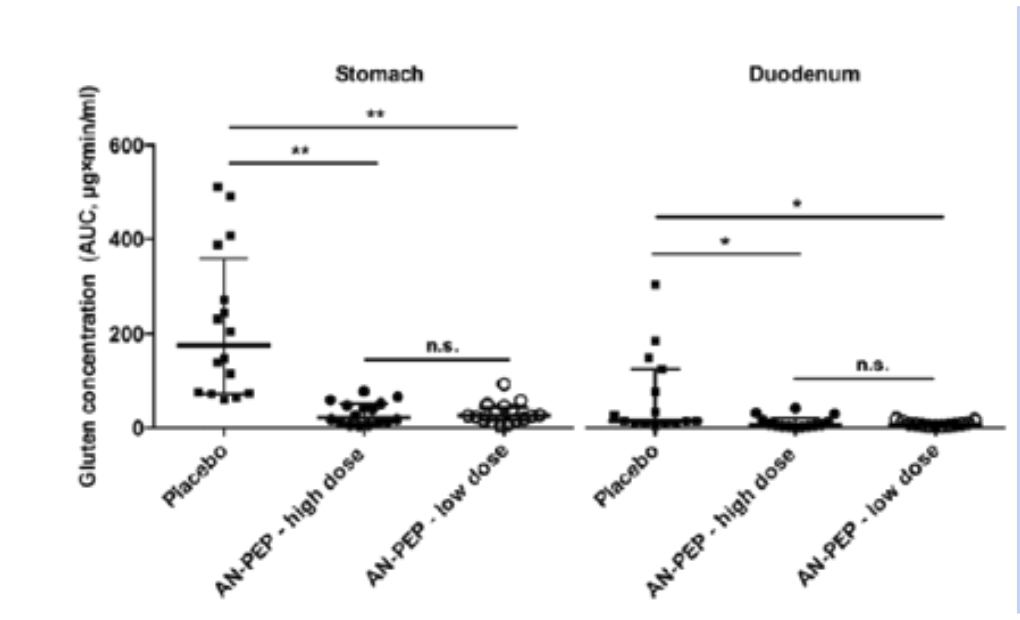
3. Another approximation to evaluate the efficacy of the propyl-oligopeptidase was performed in gluten-sensitive subjects. A randomized placebo-controlled crossover study was carried out with 18 gluten-sensitive subjects, consuming a porridge containing 0.5 g gluten together with two tablets either containing a high or low dose of AN-PEP (propyl-oligopeptidase) or placebo.
Objective:
The study aims to determine whether AN-PEP can significantly reduce gluten levels in the stomach and duodenum when consumed with a gluten-containing meal, compared to a placebo, and assess its dose-dependent effects on gluten degradation.
Results:
Gluten concentration in the stomach and duodenum of individuals treated either a high or low dose of AN-PEP (propyl-oligopeptidase) or placebo.
Conclusion:
The results from this double-blinded, placebo-controlled study showed that both a low and a high dose of AN-PEP in the form of tablets significantly reduced the gluten concentrations in the stomach and duodenum of gluten-sensitive individuals.
-Study: König, J., Holster, S., Bruins, M. J. & Brummer, R. J. Randomized clinical trial: Effective gluten degradation by Aspergillus Niger-derived enzyme in a complex meal setting. Sci Rep 7, 1–7 (2017)
How Does DIGEGLUTEN Works?
What is DIGEGLUTEN used for?
How does DIGEGLUTEN work?
How to take DIGEGLUTEN ?
1 capsule per meal. Take up to 3 capsules per day.
Does DIGEGLUTEN have side effects?
About Aora Health
Nutraceutical Research and Development Company
We are part of AORA Health, a nutraceutical research and development company.
We create innovative, scientifically proven solutions with specific benefits designed to complement or replace pharmaceuticals.
Our mission is to improve people’s well-being through nutraceutical products with proven benefits and the backing of science.